Join our WhatsApp Group
Breaking
Thursday, October 8, 2026 Jaipur Edition
Rajasthan High Court
Constitutional Law

Scheduled Areas Can Be Brought Within Municipal Limits Unless the Governor Excludes the Law: Rajasthan High Court

Published: · NyayVidhan

A Division Bench of the Rajasthan High Court at Jodhpur upheld State notifications that brought Scheduled Area villages and gram panchayats within municipal limits (paras 1, 19). It held that paragraph 5(1) of the Fifth Schedule is exclusionary, not a condition precedent, so the Rajasthan Municipalities Act, 2009 applies in Scheduled Areas unless the Governor excludes or modifies it (paras 10.1, 10.6). Pending a parliamentary law under Article 243-ZC(3), it set out a hybrid governance framework (para 18.3).

Scheduled Areas Can Be Brought Within Municipal Limits Unless the Governor Excludes the Law: Rajasthan High Court
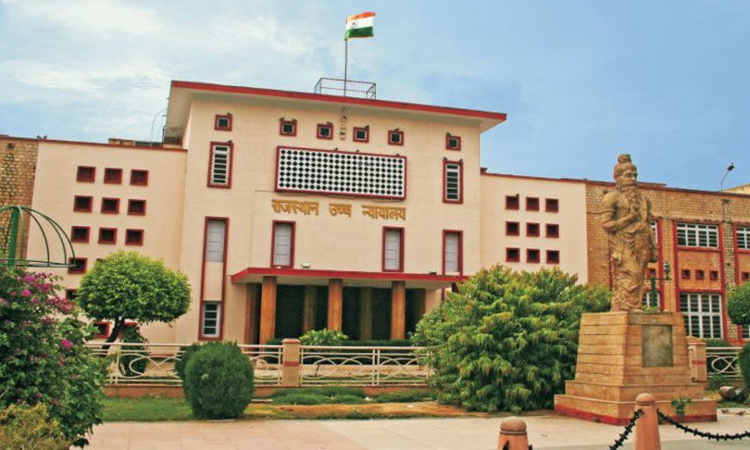
Photo: TrendSPLEND via Wikimedia Commons (CC BY-SA 4.0)

Judgment Intelligence

Other
Ankit Kumar Meena & Anr. v. State of Rajasthan & Ors. (with 13 connected writ petitions)
2025:RJ-JD:54651-DB
D.B. Civil Writ Petition No. 3118/2025
Court
Rajasthan High Court
Date of Decision
5 January 2026
Bench
Justices Pushpendra Singh Bhati and Sanjeet Purohit
Relevant Acts & Sections
Constitution of India — Articles 243-ZC, 244(1), Fifth Schedule (paragraph 5); Rajasthan Municipalities Act, 2009 — Sections 3, 329; Panchayats (Extension to Scheduled Areas) Act, 1996
Final Outcome

The challenge failed: the notifications were held constitutionally valid, and all the petitions were disposed of with the directions in para 18, including the hybrid framework and placing the judgment before the Union Government (paras 18-20).

Key holdings

  1. A Scheduled Area can be included within municipal limits under the 2009 Act unless the Governor has excluded or modified it under paragraph 5(1) (para 10.6).
  2. Article 243-ZC protects Scheduled Areas from unmediated municipalisation but leaves State legislative competence intact (paras 11.1, 11.4).
  3. Municipal inclusion does not denotify a Scheduled Area; Fifth Schedule safeguards and duties under Articles 46 and 275(1) continue (paras 13, 18.2).
  4. Until Parliament legislates under Article 243-ZC(3), civic functions run under the 2009 Act while PESA-era tribal bodies continue in an advisory role (paras 16.5, 18.3).
  5. The State must place the judgment before the Union Government for legislative consideration of MESA (para 18.5).

Brief Facts

Fourteen writ petitions challenged notifications under Sections 3 and 329 of the Rajasthan Municipalities Act, 2009 declaring Scheduled Area panchayat circles municipal areas or adding villages to the Udaipur Municipal Corporation or the Udaipur Development Authority region (paras 1, 1.1). The lead case concerned Village Balicha, a Scheduled Area under the Scheduled Areas (State of Rajasthan) Order, 2018, included in the Udaipur Municipal Corporation by a notification dated 26.12.2024 (paras 1.2, 2). The petitioners contended that Article 243-ZC(1) bars Part IX-A in Scheduled Areas and that no parliamentary law or Governor's direction had extended municipal law there (paras 3.1-3.5). The State replied that general laws apply unless the Governor excludes them (paras 4.1-4.2).

Court's Findings

The Court held that the State Legislature may legislate on municipalities under Entry 5 of List II, and that Sections 3 and 329 empower the State to create and alter municipal areas (paras 9-9.2). The Fifth Schedule does not place Scheduled Areas beyond all State legislation: laws of general application continue to operate unless excluded or modified under paragraph 5(1) (para 10). That power is exclusionary or modificatory, not a condition precedent, and no Governor's notification excluding the 2009 Act was placed on record (paras 10.1-10.1.1, 10.5). Relying on South Eastern Coalfields, Chebrolu Leela Prasad Rao and Adivasis for Social & Human Rights Action, the Bench rejected the plea of an absolute embargo, which would render paragraph 5(1) otiose (paras 10.1.2-10.4). Article 243-ZC disables only the constitutional mandate of Part IX-A; it does not suspend State municipal law (paras 11-11.4). Municipal inclusion does not denotify a Scheduled Area or dilute Fifth Schedule safeguards (para 13). An included area ceases to be a ‘village’ for Part IX, so PESA cannot fully continue there (para 15.1). As the Municipalities (Extension to the Scheduled Areas) Bill, 2001 remains unenacted, the Court found a ‘constitutional vacuum’ (paras 16.1-16.2).

Legal Principle

Paragraph 5(1) of the Fifth Schedule lets the Governor exclude or modify a law for a Scheduled Area; it is not a precondition for the law to apply. Absent such a notification, the Rajasthan Municipalities Act, 2009 operates there, and Article 243-ZC excludes only Part IX-A, not State municipal legislation (paras 10.1, 10.6, 11.1).

Precedents Relied Upon

  1. South Eastern Coalfields Ltd. v. State of M.P. (2003) 8 SCC 648
    Relied Upon Discussed at ¶ 10, 11

    Unless the Governor issues a notification under paragraph 5(1) of the Fifth Schedule excluding a parliamentary or State law from a Scheduled Area or applying it with exceptions or modifications, there is no hindrance to the law applying; Article 243-ZC makes only Part IX-A inapplicable and does not denude the State Legislature of competence.

  2. Adivasis for Social & Human Rights Action v. Union of India Civil Appeal No. 2202 of 2012, decided on 10.05.2023 (Supreme Court)
    Relied Upon Discussed at ¶ 3, 4, 10

    Reaffirming South Eastern Coalfields: paragraph 5(1) of the Fifth Schedule is an exclusionary and modificatory power, not a condition precedent; Acts of Parliament or the State Legislature do not need a Governor's notification to apply to a Scheduled Area. Relied on by the respondents and said by the petitioners not to cover municipal inclusion.

  3. Chebrolu Leela Prasad Rao v. State of A.P. (2020) 8 SCC 404, decided on 22.04.2020 (as printed)
    Relied Upon Discussed at ¶ 4, 10

    Constitution Bench: the Governor's power under paragraph 5(1) of the Fifth Schedule does not confer power to make new law; it only permits not applying a law or applying it with exceptions or modifications. Also cited by the respondents.

View all precedents (8)
  1. South Eastern Coalfields Ltd. v. State of Madhya Pradesh & Ors. Civil Appeal Nos. 84-85 of 2016 and connected matters, decided on 21.09.2023 (Supreme Court)
    Referred To Discussed at ¶ 3

    Cited by counsel for the petitioners.

  2. State of Rajasthan v. Ashok Khetoliya & Anr. (2022) 3 SCC 295
    Referred To Discussed at ¶ 4

    Cited by the respondents for the proposition that alteration of municipal limits is a policy decision taken in exercise of legislative power and does not require a prior hearing.

  3. Debashish Soren & Ors. v. State of Jharkhand W.P.(C) Nos. 3615, 3627, 4579 of 2007, decided on 02.11.2007
    Referred To Discussed at ¶ 4

    Cited by counsel for the respondents.

  4. Jasbhai Motibhai Desai v. Roshan Kumar & Ors. Civil Appeal No. 2035 of 1971, decided on 19.12.1975
    Referred To Discussed at ¶ 4

    Cited by counsel for the respondents.

  5. Ayaaubkhan Noorkhan Pathan v. State of Maharashtra & Ors. Civil Appeal No. 7728 of 2012, decided on 08.11.2012
    Referred To Discussed at ¶ 4

    Cited by counsel for the respondents.

NyayVidhan
Court Judgments · 3 min read
Decided: January 5, 2026 Justices Pushpendra Singh Bhati and Sanjeet Purohit
PDF
WhatsApp Telegram X / Twitter LinkedIn

✕

Popular: POCSO, IBC, Electoral Bond, Article 370, NDPS Act, Bail Conditions, SC Contempt