
Join our WhatsApp Group
Breaking
Thursday, October 8, 2026 Jaipur Edition
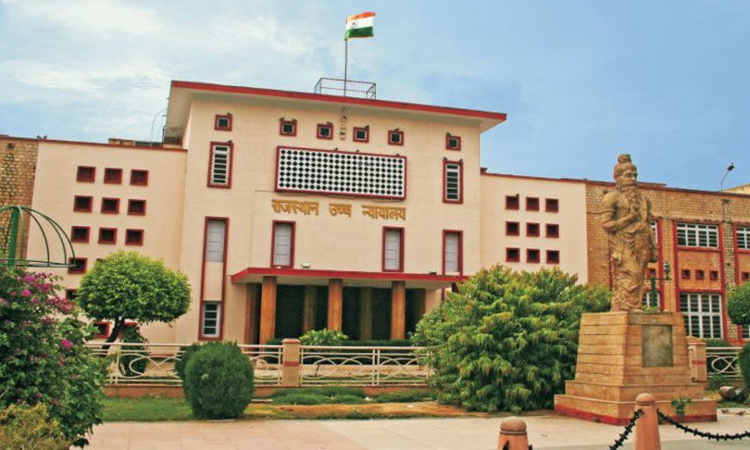
Rajasthan High Court
Criminal Law

No Indefinite Custody When Prosecution Is Lax on Witnesses: Rajasthan High Court Grants Bail in Official Secrets Case

Published: · NyayVidhan

The Rajasthan High Court granted bail to a man held since March 2024 on charges under the Official Secrets Act, 1923, because the prosecution had examined only 4 of its 18 witnesses in pre-charge evidence and had still not filed the forensic report on his mobile phone (paras 6, 11). An undertrial cannot be confined indefinitely when the prosecution is not diligent, and the gravity of the charge alone cannot justify prolonged incarceration, the Court held (para 11).

No Indefinite Custody When Prosecution Is Lax on Witnesses: Rajasthan High Court Grants Bail in Official Secrets Case

Judgment Intelligence

Bail Granted
Anandraj v. State of Rajasthan
2025:RJ-JP:43090
S.B. Criminal Miscellaneous 2nd Bail Application No. 13203/2025
Court
Rajasthan High Court
Date of Decision
28 October 2025
Bench
Justice Anil Kumar Upman
Relevant Acts & Sections
Official Secrets Act, 1923 — Sections 3, 9; Bharatiya Nagarik Suraksha Sanhita, 2023 — Sections 480(6), 483; Constitution of India — Article 21
Final Outcome

Second bail application allowed on a Rs 3,00,000 personal bond with two Rs 1,50,000 sureties, police-station attendance twice a month, surrender of any passport and an active mobile number; any breach alone justifies cancellation (paras 14-17).

Key holdings

  1. Where the prosecution fails to proceed with due promptness, continued detention amounts to punishment before conviction (para 11).
  2. Examining only 4 of 18 witnesses despite warrants, with the FSL report still pending, showed a lax prosecution that weighed for bail (paras 6, 11).
  3. State v. Captain Jagjit Singh was distinguished because this case is triable by a Magistrate, capping any sentence at seven years (para 12).
  4. Though Section 480(6) BNSS did not apply before charges were framed, its purpose and spirit guided bail after 19 months in custody (paras 12-13).

Brief Facts

The petitioner was arrested on an FIR of the Special Police Station, C.I.D. (Surakchha), for offences under Sections 3 and 9 of the Official Secrets Act, 1923, in custody since 14.03.2024 (paras 1, 6). His first bail plea was withdrawn on 24.01.2025 with liberty to approach the trial court under Section 480(6) BNSS (para 2). His counsel said nothing incriminating was recovered from his phone, that he had not been given the material he allegedly sent on WhatsApp to a person in a neighbouring country, and that Section 3 was not attracted (para 3). The State said the offence carried up to fourteen years, related to the safety of the State and was supported by sufficient material (para 4).

Court's Findings

The trial court's order sheets showed that the complaint was filed on 09.05.2024 but nothing happened for six months while the prosecution sanction was awaited; after cognizance on 25.11.2024 no witness appeared at the next eleven hearings (para 6). Despite bailable and non-bailable warrants, only 4 of 18 witnesses had been examined, two statements stayed incomplete for want of the FSL report, and the prosecution kept seeking time to reply to the accused's application to close evidence (para 6). The Court found the prosecution's approach lax and negligent (paras 6, 11). Prolonged incarceration, especially with an anticipated long trial, is a valid ground for bail under Article 21, though the nature of the offence must be weighed (para 7). After citing Jahir Hak and K.A. Najeeb (para 9), it held that continued detention without progress in the trial amounts to punishment before conviction (para 11). State v. Captain Jagjit Singh was distinguished: that accused faced a Sessions trial carrying fourteen years, while this petitioner faces a Magistrate's trial with a seven-year ceiling (para 12). Section 480(6) BNSS did not apply as charges were not framed, but its purpose could not be ignored (paras 12-13).

Legal Principle

An accused cannot be kept in custody as an undertrial for an indefinite period when the prosecution is not diligent in producing its witnesses. The right to a speedy trial is part of personal liberty under Article 21, and the gravity of the charge alone cannot justify prolonged incarceration where the trial is not progressing (para 11).

Precedents Relied Upon

  1. Union of India v. K.A. Najeeb (2021) 3 SCC 713
    Relied Upon Discussed at ¶ 3, 9

    Quoted, as considered in Jahir Hak, for the principle that even under special statutes with rigorous bail conditions, accused persons have been enlarged on bail after long custody with little possibility of early completion of trial.

  2. Jahir Hak v. State of Rajasthan AIR 2022 (SC) 3047
    Relied Upon Discussed at ¶ 9

    Bail was extended by the Supreme Court in view of the observations in K.A. Najeeb on prolonged custody and delay in trial.

  3. Mehmood Mohammed Sayeed v. State of Maharashtra 2001 (7) SRJ 336
    Relied Upon Discussed at ¶ 10

    The Supreme Court released an accused on bail with conditions, considering that the trial might take a long time.

View all precedents (8)
  1. Subhelal @ Sushil Sahu v. State of Chhattisgarh (2025) 5 SCC 140
    Relied Upon Discussed at ¶ 13

    Applications under Section 437(6) Cr.P.C. call for a liberal approach, particularly where the accused is not at fault for the delay and his custody is substantial compared with the prescribed sentence.

  2. State v. Captain Jagjit Singh AIR 1962 (SC) 253
    Distinguished Discussed at ¶ 4, 12

    Relied on by the State; distinguished because the accused there faced a Sessions trial for an offence carrying fourteen years, whereas the petitioner faces a Magistrate trial with a maximum of seven years.

  3. Maneka Gandhi v. Union of India AIR 1978 SC 597
    Referred To Discussed at ¶ 7

    Article 21 protects life and personal liberty against legislative as well as executive action; the procedure established by law must be just, fair and reasonable.

  4. Masroor v. State of U.P. 2009 (14) SCC 286
    Referred To Discussed at ¶ 8

    A balance must be struck between the personal liberty of the accused and the interest of the public and the prosecution.

  5. Neeru Yadav v. State of Uttar Pradesh 2014 (16) SCC 508
    Referred To Discussed at ¶ 8

    Liberty is the fulcrum of a civilised society but is not absolute; courts must balance it against the collective interest.

NyayVidhan
Court Judgments · 3 min read
Decided: October 28, 2025 Justice Anil Kumar Upman
PDF
WhatsApp Telegram X / Twitter LinkedIn

✕

Popular: POCSO, IBC, Electoral Bond, Article 370, NDPS Act, Bail Conditions, SC Contempt