

Join our WhatsApp Group
Breaking
Wednesday, October 7, 2026 Jaipur Edition
Rajasthan High Court
High Courts

Benami Finding Cannot Rest on Retracted Statement Without Cross-Examination: Rajasthan High Court Remands Case

Published: · NyayVidhan

A Division Bench of the Rajasthan High Court set aside orders treating 79 properties of a Jodhpur real estate company as benami, because the finding rested substantially on a chartered accountant's search statement that was retracted and never tested by cross-examination (paras 23, 31-32). It remanded the matter to the Initiating Officer, who must consider a later income-tax assessment accepting the source of the same investment; the provisional attachment continues meanwhile (paras 35-36).

Benami Finding Cannot Rest on Retracted Statement Without Cross-Examination: Rajasthan High Court Remands Case
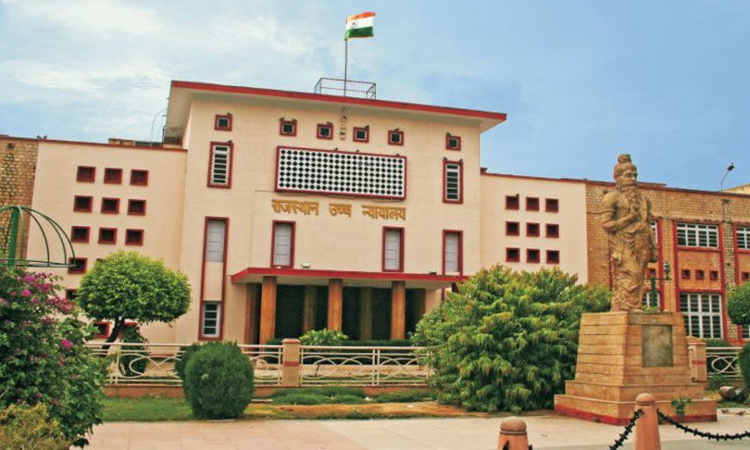
Photo: TrendSPLEND via Wikimedia Commons (CC BY-SA 4.0)

Judgment Intelligence

Other
M/s Alishan Complex Pvt. Ltd. v. The Initiating Officer, DCIT, Benami Prohibition Unit, Jaipur
2026:RJ-JP:35541-DB
D.B. Civil Miscellaneous Appeal No. 1595/2026
Court
Rajasthan High Court
Date of Decision
3 August 2026
Bench
Justices Arun Monga and Sandeep Shah
Relevant Acts & Sections
Prohibition of Benami Property Transactions Act, 1988 — Sections 2(9), 24, 26, 46; Income-tax Act, 1961 — Sections 69, 132(4)
Final Outcome

Appeal disposed of. The Tribunal, adjudicating and final attachment orders were set aside and the matter remanded to the Initiating Officer, who must consider the assessment order and the company's explanation, and allow cross-examination if the CA's statement is relied on; the provisional attachment continues (paras 35-36).

Key holdings

  1. A company is not immune from being a benamidar merely because it is a corporate entity (para 32).
  2. Benami proceedings are not barred by a clearance under Section 69 of the Income-tax Act, but such findings must be considered (para 33).
  3. Refusing cross-examination of a witness whose statement is foundational breaches natural justice, especially once the statement is retracted (paras 23, 31-32).
  4. A noticee’s specific, document-backed explanation of its source of funds must be examined with reasons (para 31).
  5. A later assessment order on the same funds must be considered first by the fact-finding authority (paras 31, 35).

Brief Facts

After a 2022 income-tax search on the Maharani Group, the Initiating Officer under the Prohibition of Benami Property Transactions Act treated 79 properties bought by the appellant company in 2017-18 as benami for the group's promoter, who held an indirect stake of about 4% (paras 3-5, 8). The finding relied heavily on a CA's statement under Section 132(4) of the Income-tax Act, which he retracted within nine days; the company's request to cross-examine him was refused (paras 12, 23). The Adjudicating Authority and the Appellate Tribunal upheld the attachment (paras 1-2). On 27.03.2026 an income-tax assessment accepted the source of the same Rs 11.16 crore investment (paras 23, 31).

Court's Findings

The Bench held that the PBPT Act operates independently of income-tax outcomes, so a clearance under Section 69 does not bar benami proceedings, though such findings carry evidentiary value and must be considered (para 33). A company is not immune from being a benamidar merely because it is a corporate entity (para 32). But the CA's statement was foundational, not corroborative: without it, no banking trail links the promoter's money to the purchases (para 23). Following Andaman Timber Industries, refusing cross-examination of a witness whose statement forms the basis of an order is a serious breach of natural justice, aggravated here because the statement was retracted and the witness was never examined (paras 23, 31). The later assessment order was never placed before any authority under the Act (para 31). And the company's documented defence, that its reserves predated the promoter's stake by about a decade, was never examined (para 31).

Legal Principle

In benami proceedings, an adverse finding founded substantially on a retracted third-party statement recorded during an income-tax search cannot stand where the affected party's request to cross-examine its maker was refused. Income-tax findings on the same funds are not conclusive but must be considered (paras 31-33).

Precedents Relied Upon

  1. Andaman Timber Industries v. Commissioner of Central Excise, Kolkata-II (2016) 15 SCC 785 : (2015) 324 ELT 641 (SC)
    Followed Discussed at ¶ 15, 23, 25, 31

    Where witness statements form the basis of an order, refusing cross-examination despite a request is a serious flaw that renders the order a nullity.

  2. Valliammal v. Subramaniam (2004) 7 SCC 233
    Applied Discussed at ¶ 21, 31, 32

    Sets out the indicia for deciding whether a transaction is benami.

  3. M/s Telestar Travels Pvt. Ltd. v. Special Director of Enforcement (2013) 9 SCC 549
    Distinguished Discussed at ¶ 26, 29

    Denial of cross-examination was upheld there only because the statements merely corroborated undisputed documents; here the statement is foundational and retracted.

View all precedents (15)
  1. Vallabh Textiles v. Additional Commissioner, Central Tax GST, Delhi East 2025:DHC:2559-DB (Delhi HC, 09.04.2025)
    Distinguished Discussed at ¶ 26, 29

    Statements there corroborated undisputed documentary evidence and the request was a blanket one.

  2. K.L. Tripathi v. State Bank of India (1984) 1 SCC 43
    Distinguished Discussed at ¶ 26, 29

    Distinguished on the same ground as Telestar and Vallabh Textiles.

  3. State of Kerala v. K.T. Shaduli Grocery Dealer (1977) 2 SCC 777
    Referred To Discussed at ¶ 25

    Where third-party accounts are relied on, the right to be heard includes the right to cross-examine.

  4. Lakshman Exports Ltd. v. Collector of Central Excise (2005) 10 SCC 634
    Referred To Discussed at ¶ 25

    A specific request to cross-examine persons whose statements are relied upon cannot be brushed aside.

  5. Kishinchand Chellaram v. CIT (1980) 125 ITR 713 (SC)
    Referred To Discussed at ¶ 25

    Evidence gathered behind the assessee’s back cannot be used without an opportunity to controvert and cross-examine.

  6. Mehta Parikh & Co. v. CIT (1956) 30 ITR 181 (SC)
    Referred To Discussed at ¶ 25

    Untested affidavits whose deponents were not cross-examined cannot later be disputed by the Revenue.

  7. Vinod Solanki v. Union of India (2008) 16 SCC 537
    Referred To Discussed at ¶ 27

    A retracted confession may be acted upon only if corroborated by independent and cogent evidence; the department must show it was voluntary.

  8. K.T.M.S. Mohd. v. Union of India (1992) 3 SCC 178
    Referred To Discussed at ¶ 27

    Statements recorded under statutory compulsion, once retracted, require the authority to examine voluntariness and truth before relying on them.

  9. Pullangode Rubber Produce Co. Ltd. v. State of Kerala (1973) 91 ITR 18 (SC)
    Referred To Discussed at ¶ 27

    An admission is not conclusive and may be shown to be wrong.

  10. Jaydayal Poddar v. Bibi Hazra (1974) 1 SCC 3
    Referred To Discussed at ¶ 21, 28

    The burden of proving a benami transaction is strict and rests on the party alleging it.

  11. Swadeshi Cotton Mills v. Union of India (1981) 1 SCC 664
    Referred To Discussed at ¶ 28

    The more drastic the civil consequence, the fuller the hearing that must precede it.

  12. M/s Marg Realities Ltd. v. Dy. CIT (Benami Prohibition) 448 ITR 574 (Mad)
    Referred To Discussed at ¶ 10, 16, 17

    Cited before the Tribunal and by the parties on benami proceedings.
NyayVidhan
Court Judgments · 2 min read
Decided: August 3, 2026 Justices Arun Monga and Sandeep Shah
PDF
WhatsApp Telegram X / Twitter LinkedIn

✕

Popular: POCSO, IBC, Electoral Bond, Article 370, NDPS Act, Bail Conditions, SC Contempt