
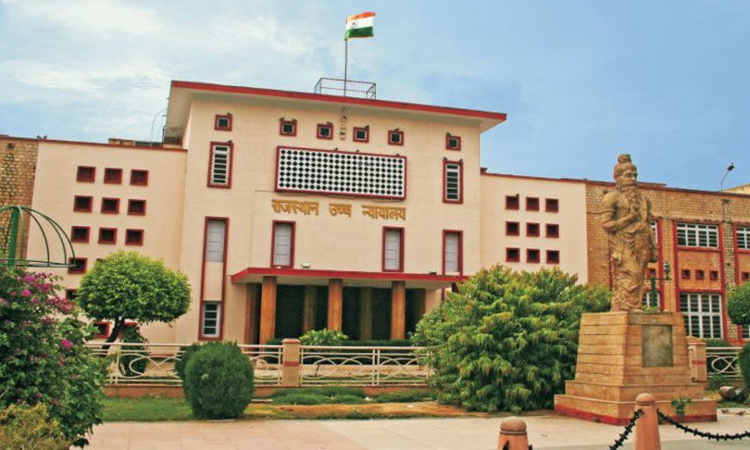
Judgment Intelligence
Petition Allowed- Court
- Rajasthan High Court
- Date of Decision
- 20 August 2026
- Bench
- Justice Arun Monga and Justice Maneesh Sharma
- Relevant Acts & Sections
- Arbitration and Conciliation Act, 1996 — Sections 34, 37; Indian Contract Act, 1872 — Sections 62, 72, 73
Appeal disposed of: the Commercial Court's order set aside and the award restored, reduced to Rs 8,65,05,938.24; customs and State authorities left free to proceed over the excess duty, with copies sent to them (paras 24, 33-34).
Key holdings
- Under Section 37 the appellate court checks only whether the Section 34 court stayed within its limited jurisdiction (para 12.2).
- Equitable set-off is unavailable across separate annual contracts without an express term or a counterclaim (paras 13.4-13.6).
- A Section 34 court cannot rely on documents handed up at the final hearing that were never part of the arbitral record (para 15.5).
- Courts may correct a computational error in an award under Sections 34 and 37, following Gayatri Balasamy (paras 22-23).
Brief Facts
Court's Findings
Legal Principle
Precedents Relied Upon
- Associate Builders v. Delhi Development Authority (2015) 3 SCC 49
The arbitrator is the master of the evidence and construction of the contract is primarily for the arbitrator; a Section 34 court does not sit in appeal over the award.
- Ssangyong Engineering & Construction Co. Ltd. v. National Highways Authority of India (2019) 15 SCC 131
Patent illegality must go to the root of the matter; it does not cover an erroneous application of law or reappraisal of evidence.
- Dyna Technologies Pvt. Ltd. v. Crompton Greaves Ltd. (2019) 20 SCC 1
Disagreement with the arbitrator's view of facts or contract does not permit interference if the view is possible.
View all precedents (13)
- MMTC Ltd. v. Vedanta Ltd. (2019) 4 SCC 163
Section 37 does not permit a second look at the merits; scrutiny is confined to the Section 34 court's exercise of its limited jurisdiction.
- Konkan Railway Corporation Ltd. v. Chenab Bridge Project Undertaking (2023) 9 SCC 85
Section 37 does not allow a fresh appraisal of evidence; where two views are possible the appellate court cannot interfere.
- PSA Sical Terminals Pvt. Ltd. v. Board of Trustees of V.O. Chidambranar Port Trust Tuticorin (2021) 18 SCC 715
Reiterated the limited scope of appellate interference with arbitral awards.
- UHL Power Co. Ltd. v. State of Himachal Pradesh (2022) 4 SCC 116
Reiterated the limited scope of appellate interference with arbitral awards.
- M/s Lakshmichand and Balchand v. State of Andhra Pradesh (1987) 1 SCC 19
Equitable set-off requires cross-demands arising from the same transaction or so connected as to form one transaction; a disputed, unascertained sum cannot be adjusted against another contract.
- Mafatlal Industries Ltd. v. Union of India (1997) 5 SCC 536
Relied on by the Commercial Court on unjust enrichment in tax refunds; held inapplicable to a commercial contract of sale between parties.
- State of Rajasthan v. Puri Construction Co. Ltd. & Ors. (1994) 6 SCC 485
A court cannot substitute its own evaluation of law or fact to hold that the arbitrator acted contrary to the bargain between the parties.
- P.R. Shah, Shares and Stock Broker (P) Ltd. v. B.H.H. Securities (P) Ltd. & Ors. AIR 2012 SC 1866
An arbitral tribunal cannot decide on personal knowledge outside the record; by extension a Section 34 court cannot rely on extraneous material.
- Consolidated Construction Consortium Ltd. v. Software Technology Parks of India (2025) 7 SCC 757
Section 34 is not an appellate provision; if two views are possible the arbitrator's view prevails.
- Gayatri Balasamy v. M/s ISG Novasoft Technologies Ltd. (2025) 4 S.C.R. 2080
Courts have limited power under Sections 34 and 37 to modify an award to correct clerical, computational or typographical errors apparent on the record.
