
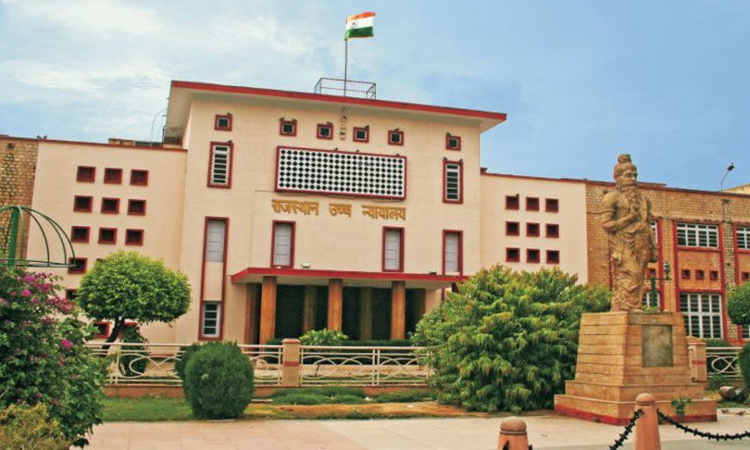
Judgment Intelligence
Petition Allowed- Court
- Rajasthan High Court
- Date of Decision
- 17 April 2025
- Bench
- Justice Ashok Kumar Jain
- Relevant Acts & Sections
- Constitution of India — Articles 143, 363; Code of Civil Procedure, 1908 — Section 9, Order VII Rule 11
All four revision petitions were allowed. The trial courts' orders were set aside, the State's Order VII Rule 11 applications were allowed and the four suits (Nos. 66/2019, 6/2023, 14/2023 and 9/2023) were rejected, with no order as to costs (paras 50-51).
Key holdings
- Under Order VII Rule 11 the court reads only the plaint and its documents; a clear legal bar is not a mixed question of fact and law (paras 23-24).
- A plaint in a suit expressly or impliedly barred must be rejected under clause (d) (paras 25-27).
- Article 363 bars every court from disputes arising out of pre-Constitution covenants with rulers; the only route is Article 143 (paras 29, 31-33).
- Covenant buildings given to the State for official use are held neither on lease nor on licence; the ruler’s heirs cannot claim possession or mesne profits (paras 41, 49).
- Official use covers offices, courts, schools and hospitals, not a shopping mall, gallery or other commercial venture (para 39).
Brief Facts
Court's Findings
Legal Principle
Precedents Relied Upon
- State of Seraikella v. Union of India and Another AIR 1951 SC 253
Article 363 overrides other provisions of the Constitution; courts have no jurisdiction over suits arising out of instruments executed before the Constitution, even suits pending at its commencement.
- Karan Singh v. State of Jammu and Kashmir & Ors. MANU/SC/0332/2004
Any right arising out of or relating to a treaty, covenant or agreement mentioned in Article 363 is barred from determination by any court.
- H.H. Maharajadhiraja Madhav Rao Jivaji Rao Scindia Bahadur of Gwalior v. Union of India and Anr. AIR 1971 SC 530
Relied on State of Seraikella; referred to in Karan Singh on the Article 363 bar.
View all precedents (42)
- State of Karnataka v. State of Tamil Nadu (2018) 4 SCC 1
Relied on State of Seraikella on Article 363.
- State of Himachal Pradesh v. Union of India (2011) 13 SCC 344
Referred to State of Seraikella on Article 363.
- Maharaj Umeg Singh and Others v. The State of Bombay and Others AIR 1955 SC 540
Referred to State of Seraikella on Article 363.
- State of Bihar v. Union of India AIR 1970 SC 1446
Referred to State of Seraikella on Article 363.
- Talat Fatima Hasan v. Syed Murtaza Ali Khan (Dead) by Legal Representatives and Ors. (2020) 15 SCC 655
On rulership as distinct from a ruler's declared private properties and succession to them; held to have no bearing because no succession issue arose.
- Jagat Singh v. The Jaipur Development Authority, Jaipur S.B. CSA No. 12/1987 (order dated 07.09.1987), affirmed in S.L.P. (Civil) No. 2803/1989 (order dated 10.04.1995)
Proceeding found maintainable there, but it did not concern enforcement of rights under the covenant or the Article 363 bar.
- Satish Kumar Pareek v. The State of Rajasthan & Ors. D.B. Civil Writ Petition (PIL) No. 7133/2004 (order dated 05.05.2008)
Proceeding found maintainable there, but it did not concern enforcement of rights under the covenant or the Article 363 bar.
- Director of Estate, Jaipur v. Maharaja Brigadier Sawai Bhawani Singh Rajput through LRs and Ors. 2018 (2) DNJ (Raj.) 659
Cited by the plaintiffs; held not applicable because it did not concern enforcement of covenant rights or the Article 363 bar.
- Director of Estate v. Maharaja Brigadier Sawai Bhawani Singh and Ors. MANU/RH/1278/2007, affirmed in D.B. Special Appeal (Writ) No. 1108/2008
Cited by the State on the Article 363 bar.
- T. Arivandandam v. T.V. Satyapal (1977) 4 SCC 467
A plaint that on a meaningful reading is manifestly vexatious and meritless should be rejected under Order VII Rule 11; an illusory cause of action created by clever drafting must be nipped in the bud.
- Sopan Sukhdeo Sable v. Assistant Charity Commissioner (2004) 3 SCC 137
No court should let a plaintiff protract a suit that discloses no cause of action or is barred by law.
- Popat and Kotecha Property v. State Bank of India Staff Association (2005) 7 SCC 510
No court should let a plaintiff protract a suit that discloses no cause of action or is barred by law.
- Saleem Bhai v. State of Maharashtra (2003) 1 SCC 557
Under clauses (a) and (d) only the plaint averments are germane; the written statement is irrelevant, and the power can be exercised at any stage.
- Dahibhen v. Arvindbhai Kalyanji Bhanusali through LRs and Ors. 2020 SCC Online (SC) 562
The power to reject a plaint is drastic and its conditions must be strictly followed; the court looks at the plaint and the documents relied on in it.
- Ramisetty Venkatanna v. Nasyam Jamal Saheb 2023 INSC 458
A plaint should be rejected under Order VII Rule 11 if it is vexatious, shows an illusory cause of action or is barred by law.
- A.R. Antulay v. R.S. Nayak & Anr. AIR 1988 SC 1531
The power or jurisdiction of a court is legislative in character.
- Chief Engineer, Hydel Project & Ors. v. Ravinder Nath & Ors. (2008) 2 SCC 350
A decree passed without jurisdiction is a nullity and can be challenged even in execution.
- Kiran Singh and Others v. Chaman Paswan and Others AIR 1954 SC 340
A defect of jurisdiction goes to the root of the matter and cannot be cured by consent.
- Abdulla Bin Ali v. Gullapa & Ors. (1985) 2 SCC 54
Jurisdiction does not depend on the defence taken in the written statement.
- Bank of Baroda v. Moti Bhai and Ors. (1985) 1 SCC 475
On jurisdiction, regard must be had to the substance of the matter and not the form of the suit.
- Bhanu Ram v. Janak Singh & Ors. 2012 (2) WLC (SC) Civil 254
Cited by the plaintiffs: only the plaint averments can be considered on an application for rejection.
- Kamala and Ors. v. K.T. Eshwarasa and Ors. 2018 (12) SCC 661
Cited by the plaintiffs: no evidence or defence can be looked into on an Order VII Rule 11 application.
- Srihari Hanumandas Totala v. Hemant Vithal Kamat & Ors. (2021) 9 SCC 99
Cited by the plaintiffs: only the plaint averments may be considered at this stage.
- Pawan Kumar v. Babu Lal since deceased through legal heirs and Ors. 2019 (4) SCC 367
Cited by the plaintiffs: a plaint is rejected only if the plaint itself shows, without doubt or dispute, that the suit is barred.
- Hari Mohan Sharma and Ors. v. Chanranjeet Singh Rekhi & Ors. 2019 (12) SCC 412
Cited by the plaintiffs: an objection about necessary or proper parties is a triable issue.
- Gopal v. Manohar Lal and Ors. 2016 (3) DNJ (Raj.) 1208
Cited by the plaintiffs: jurisdiction is a mixed question, and a plaint can be rejected only if barred by law.
- Babulal and Ors. v. Board of Revenue, Rajasthan, Ajmer & Ors. 2011 (2) DNJ (Raj.) 730
Cited by the plaintiffs: the trial court must examine the plaint with its supporting material.
- Pali Central Co-operative Bank Limited & Anr. v. Smt. Pushpa Devi & Anr. 2013 (3) DNJ (Raj.) 1418
Cited by the plaintiffs: a civil court has jurisdiction over disputes about civil rights.
- Prince Kazmi v. Sandeep Khaturia & Ors. 2023 (2) DNJ (Raj.) 537
Cited by the plaintiffs: an Order VII Rule 11 application can be decided after recording evidence on the point.
- Gobar Ram v. Ram Pratap 2021 (4) WLC (Raj.) 415
Cited by the plaintiffs: only the plaint averments and the documents it is based on are examined.
- New Swim and Smile Swimming Pool v. Smt. Usha Soni & Anr. (2019) 1 WLC (Raj.) UC 165
Cited by the plaintiffs: non-impleadment must be raised in the written statement, not under Order VII Rule 11.
- State of Rajasthan v. Sawai Tejsinghji Maharaja of Alwar AIR 1968 Raj. 52
Cited by the State on the Article 363 bar.
- Sawai Tej Singh v. Union of India (1979) 1 SCC 512
Cited by the State on the Article 363 bar.
- Rajmata Krishna Kumari v. State of Rajasthan and Ors. 20074 (1) RLW Raj. 570 [sic]
Cited by the State on the Article 363 bar.
- Draupadi Devi & Ors. v. Union of India (2015) 8 SCC 672
Cited by the State on the Article 363 bar.
- Kesavananda Bharti v. State of Kerala AIR 1973 SC 1461
Public servants must act within the limits of the Constitution and respect its basic structure (parting observations).
- Manoj Narula v. Union of India (2014) 9 SCC 1
Purity of administration and integrity in public life; no misuse of position for personal gain (parting observations).
- Vineet Narain v. Union of India (1998) 1 SCC 226
Public servants are answerable, transparent and accountable for their decisions (parting observations).
- State of Punjab v. Gurdial Singh (1980) 2 SCC 471
Power must be exercised justly and fairly, without arbitrariness (parting observations).
