
Judgment Intelligence
Petition Allowed- Court
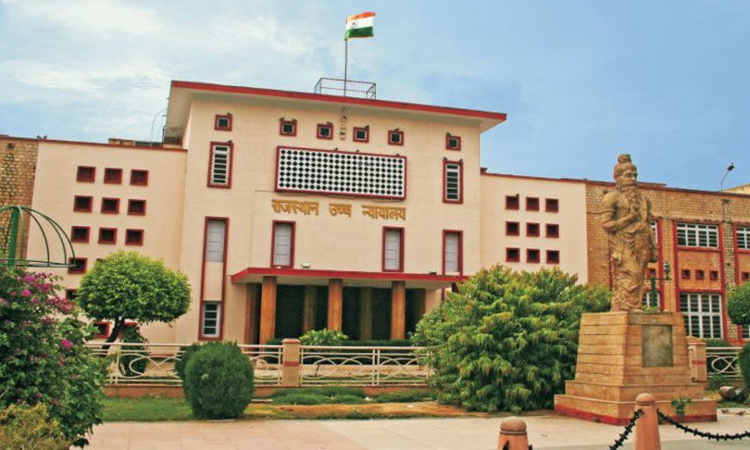
- Rajasthan High Court
- Date of Decision
- 19 December 2024
- Bench
- Chief Justice Manindra Mohan Shrivastava and Justice Ashutosh Kumar
- Relevant Acts & Sections
- Motor Vehicles Act, 1988 — Sections 39, 56, 64(o), 192, 199B, 210A, 210C, 211; Central Motor Vehicles Rules, 1989 — Rule 81 (Serial No. 11A, note), Rules 62-73; Constitution of India — Article 226
All the writ petitions were allowed without costs. The note to Serial No. 11A of Rule 81 was declared ultra vires Section 64(o) read with Section 211 and inoperative; the respondents must not levy the daily additional fee when considering the petitioners' renewal applications (paras 52-54).
Key holdings
- The fitness-certificate fee under Section 64(o) is valid; only the fifty-rupee daily charge after expiry fell (paras 34, 52).
- The Motor Vehicles Act does not require renewal before expiry; the violation is plying a vehicle without a valid fitness certificate (paras 38-39, 45).
- Section 211 supports fees for services and regulation, not punitive charges (paras 36, 47).
- Chapter XIII lets governments revise or multiply existing fines, not create new ones (para 48).
- A levy whose declared aim is deterrence is punitive in nature (paras 44-45).
Brief Facts
Court's Findings
Legal Principle
Precedents Relied Upon
- Gaurav Kumar v. Union of India & Ors. 2024 SCC OnLine SC 1841
Delegated legislation may be challenged for failure to conform to the parent statute or for exceeding the authority it confers; a fee is a compulsory exaction, so a delegate's power to levy fees cannot be implied and must be specifically conferred and strictly exercised; a delegate cannot alter the legislative policy or create rights, obligations or disabilities not contemplated by the parent Act. Also cited by the petitioners.
- State of M.P. & Ors. v. Rakesh Sethi & Anr. AIR 2020 SC 4156
Section 211 of the Motor Vehicles Act is a residuary power to levy fees for contingencies not covered by a specific power that entail some activity or service by the State; the Bench read it to mean that the impost must be in the nature of a fee. Also cited by the petitioners.
- Union of India v. Association of Unified Telecom Service Providers of India & Ors. (2020) 3 SCC 525
A late fee charged when a customer fails to pay within the due date is a penalty; applied to hold the daily additional fee punitive. Also cited by the petitioners.
View all precedents (27)
- State of U.P. & Ors. v. Vam Organic Chemicals Ltd. & Ors. AIR 2003 SC 4650
A levy with no connection to the cost of administering a regulation cannot be sustained as a regulatory fee.
- Jalkal Vigbhag Nagar Nigam & Ors. v. Pradeshiya Industrial & Investment Corporation & Anr. (2021) 20 SCC 657
Cited by the respondents; the Court accepted that the distinction between a tax and a fee has been substantially effaced, that only a broad correlation between the fee and the service or regulatory expense is needed, and that a fee may involve compulsion, upholding the fitness-certificate fee itself.
- Chennai City Auto Ootunargal Sangam v. The Secretary, Ministry of Road Transport & Highways & Ors. W.P. No. 1598 of 2017 and connected matters, decided on 03.04.2017 (Madras High Court)
The Madras High Court held the 2016 additional fee of fifty rupees a day after expiry of a fitness certificate punitive, on a committee's recommendation to levy a fine for non-renewal in time; the Bench found the same objective behind the impugned levy. Cited by the petitioners.
- 'K' Savakash Auto Rickshaw Sangha v. Union of India & Ors. 2024 SCC OnLine Bom 970 (Bombay High Court)
Cited by the respondents; the Bench was unable to subscribe to the view taken by the Bombay High Court.
- Commissioner, Hindu Religious Endowments, Madras v. Sri Lakshmindra Thirtha Swamiar of Sri Shirur Mutt (1954) 1 SCC 412
A fee is money taken by the Government as the return for work done or services rendered; fees for licences and fees for services distinguished.
- H H Sudhindra Thirtha Swamiar v. Commissioner for Hindu Religious and Charitable Endowments 1963 Supp (2) SCR 302
A levy does not cease to be a fee merely because of compulsion, nor must it relate directly to the service rendered to each individual; a reasonable relation between the levy and the expenses of the service suffices.
- Corporation of Calcutta v. Liberty Cinema 1964 SCC OnLine SC 65
Licence fees are not necessarily charged in return for services and may defray the costs of administering local regulations.
- Secunderabad Hyderabad Hotel Owners' Association & Ors. v. Hyderabad Municipal Corporation, Hyderabad & Anr. (1999) 2 SCC 274
Licence fees are regulatory or compensatory; fees for regulating activities may be valid although no service is rendered. Also cited by the respondents.
- Indian Express Newspapers (Bombay) (P) Ltd. v. Union of India (1985) 1 SCC 641
Referred to as one of the decisions on the grounds on which delegated legislation may be challenged, as noted in Gaurav Kumar.
- CIT v. McDowell & Co. Ltd. (2009) 10 SCC 755
Three-Judge Bench decision on the principles for interpreting Article 265, referred to as noted in Gaurav Kumar.
- Kunj Behari Lal Butail v. State of H.P. (2000) 3 SCC 40
Relied on in Gaurav Kumar for the limits of rule-making power.
- State of Andhra Pradesh v. K. Satyanarayana & Ors. AIR 1968 SC 825
Cited by counsel for the petitioners.
- Bimal Chandra Banerjee v. State of Madhya Pradesh Etc. (1970) 2 SCC 467
Cited by counsel for the petitioners.
- Jantia Hill Truck Owners Association v. Shailang Area Coal Dealer & Truck Owner Association & Ors. (2009) 8 SCC 492
Cited by counsel for the petitioners.
- B. Premanand & Ors. v. Mohan Koikal & Ors. (2011) 4 SCC 266
Cited by counsel for the petitioners.
- State of Goa v. Summit Online Trade Solutions Private Limited & Ors. (2023) 7 SCC 791
Cited by counsel for the petitioners.
- Union of India & Ors. v. K. Pushpavanam & Ors. AIR 2023 SC 3827
Cited by counsel for the petitioners.
- Bharat Singh & Ors. v. State of Haryana & Ors. (1988) 4 SCC 534
Cited by the Additional Solicitor General and the Additional Advocate General for the respondents.
- Government of Andhra Pradesh & Ors. v. P. Laxmi Devi (Smt.) (2008) 4 SCC 720
Cited by the Additional Solicitor General and the Additional Advocate General for the respondents. Relied on for a harmonious construction of Sections 64, 210C and 211; the argument was rejected.
- M. Rathinaswami & Ors. v. State of Tamil Nadu & Ors. (2009) 5 SCC 625
Cited by the Additional Solicitor General and the Additional Advocate General for the respondents. Relied on for a harmonious construction of Sections 64, 210C and 211; the argument was rejected.
- Delhi Race Club Limited v. Union of India & Ors. (2012) 8 SCC 680
Cited by the Additional Solicitor General and the Additional Advocate General for the respondents.
- Dharmendra Kirthal v. State of Uttar Pradesh & Anr. (2013) 8 SCC 368
Cited by the Additional Solicitor General and the Additional Advocate General for the respondents. Relied on for a harmonious construction of Sections 64, 210C and 211; the argument was rejected.
- Shayara Bano v. Union of India & Ors. (2017) 9 SCC 1
Cited by the Additional Solicitor General and the Additional Advocate General for the respondents.
- Authorised Officer, Central Bank of India v. Shanmugavelu (2024) 6 SCC 641
Cited by the Additional Solicitor General and the Additional Advocate General for the respondents.
