
Join our WhatsApp Group
Breaking
Saturday, October 10, 2026 Jaipur Edition
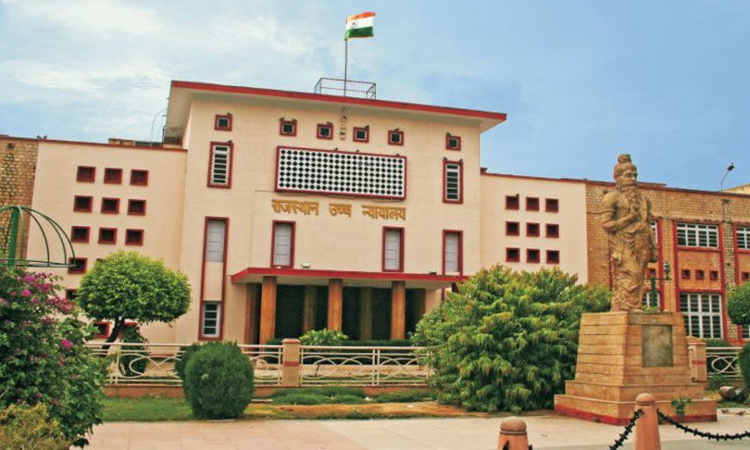
Rajasthan High Court
High Courts

Third Party Can Sue Over a Compromise Decree: Rajasthan High Court on Order XXIII Rule 3-A CPC

Published: · NyayVidhan

The Rajasthan High Court held that a person who was not a party to a partition suit and claims property independently is not barred by Order XXIII Rule 3-A or Section 96(3) CPC from challenging the resulting compromise decree, by separate suit, appeal with leave or an application. But a woman's disputed claim to be the deceased owner's widow could not be decided on a Section 151 application (paras 18, 20-25).

Third Party Can Sue Over a Compromise Decree: Rajasthan High Court on Order XXIII Rule 3-A CPC

Judgment Intelligence

Other
K v. S & Ors.
2026:RJ-JP:34889
S.B. Civil Writ Petition No. 13175/2025
Court
Rajasthan High Court
Date of Decision
31 August 2026
Bench
Justice Sudesh Bansal
Relevant Acts & Sections
Code of Civil Procedure, 1908 — Order XXIII Rules 3 and 3-A, Order XLIII Rule 1-A, Sections 96(3), 151; Constitution of India — Article 227
Final Outcome

Writ petition disposed of: the dismissal of the Section 151 application stands, but the trial court's findings on the petitioner's marital status were declared without jurisdiction and perverse, leaving her free to sue; the interim stay was vacated (paras 27-29).

Key holdings

  1. A party to a compromise must raise any challenge before the trial court under the proviso to Order XXIII Rule 3; a separate suit is barred (paras 20.1-20.8).
  2. A third party not claiming through a party may file a separate suit, an appeal with leave, or an application to the same court (para 25).
  3. Disputed questions of marital status and locus cannot be decided on a Section 151 application within Order XXIII Rule 3 (paras 17-18).

Brief Facts

After D died intestate in 2024, his sister, brother and the heirs of another brother, as Class II heirs, obtained a compromise decree dividing his self-acquired properties (paras 3, 9-11). The petitioner applied under Section 151 CPC to set it aside, claiming to be D's wife and sole Class I heir; the respondents denied any marriage, relying on the 2019 dissolution of D's earlier marriage (para 3). The trial court held her marriage unproved and dismissed the application on 31.05.2025, and she filed this petition under Article 227 (paras 1, 3).

Court's Findings

The petitioner was not a party to the suit or the compromise, and the compromise order itself said it bound only the parties (paras 7, 16). Her claim first required proof of a valid marriage to D after the 2019 dissolution; that disputed question of fact gives rise to a separate cause of action and cannot be decided within the proviso to Order XXIII Rule 3 on a Section 151 application (paras 14, 17-18). Setting out the remedies, the Court held that a party to a compromise must challenge it before the trial court and is barred from a separate suit, while a third party claiming independently may sue, appeal with leave, or apply to the same court (paras 20-20.11, 25). This accords with Sakina Sultanali Sunesara and the Karnataka High Court in Sushila v. Vijay Kumar (paras 21-22). Triloki Nath Singh concerned a person claiming through a party and was misread (paras 19, 23). The trial court's finding on her marital status was without jurisdiction (para 27).

Legal Principle

The bar of Order XXIII Rule 3-A and Section 96(3) CPC binds only parties to a compromise. A third party claiming property independently may challenge a compromise decree by separate suit, by appeal with leave, or by applying to the same court; disputed questions of status need a separate suit (paras 18, 20.9-20.10, 25).

Precedents Relied Upon

  1. Sakina Sultanali Sunesara (Momin) v. Shia Imami Ismaili Momin Jamat Samaj & Ors. 2025 SCC OnLine SC 930 (Civil Appeal Nos. 6681-6682/2023, decided 23.04.2025)
    Followed Discussed at ¶ 21

    A party who denies a compromise must go to the trial court under the proviso to Order XXIII Rule 3; a non-party whose rights are hurt by a consent decree may file a first appeal under Section 96 with leave.

  2. Sushila v. Vijay Kumar 2020 SCC OnLine Kar 3374 (Karnataka High Court, CRP No. 100105/2016)
    Followed Discussed at ¶ 22

    The bar in Order XXIII Rule 3-A applies only to parties to the compromise, not to persons with independent rights who were not parties to the suit.

  3. Triloki Nath Singh v. Anirudh Singh (D) through LRs. (2020) 6 SCC 629
    Explained Discussed at ¶ 4.2, 19, 23.1-23.3

    A suit by a person claiming through a party to a compromise is barred by Rule 3-A; it does not bar an independent suit by a true third party.

View all precedents (8)
  1. Banwari Lal v. Smt. Chando Devi (1993) 1 SCC 581
    Referred To Discussed at ¶ 24.1

    A party challenging a compromise must approach the court that recorded it; a separate suit is not maintainable.

  2. Pushpa Devi Bhagat (D) v. Rajinder Singh (2006) 5 SCC 566
    Referred To Discussed at ¶ 24.1

    Same principle on the remedy of a party to a compromise.

  3. R. Rajanna v. S.R. Venkataswamy (2014) 15 SCC 471
    Referred To Discussed at ¶ 24.1

    Same principle on the remedy of a party to a compromise.

  4. R. Janakiammal v. S. K. Kumarasamy (2021) 9 SCC 114
    Referred To Discussed at ¶ 24.1

    Same principle on the remedy of a party to a compromise.

  5. M/s. Sree Surya Developers and Promoters v. N. Sailesh Prasad (2022) 5 SCC 736
    Referred To Discussed at ¶ 24.1

    Same principle on the remedy of a party to a compromise.

NyayVidhan
Court Judgments · 2 min read
Decided: August 31, 2026 Justice Sudesh Bansal
WhatsApp Telegram X / Twitter LinkedIn

✕

Popular: POCSO, IBC, Electoral Bond, Article 370, NDPS Act, Bail Conditions, SC Contempt