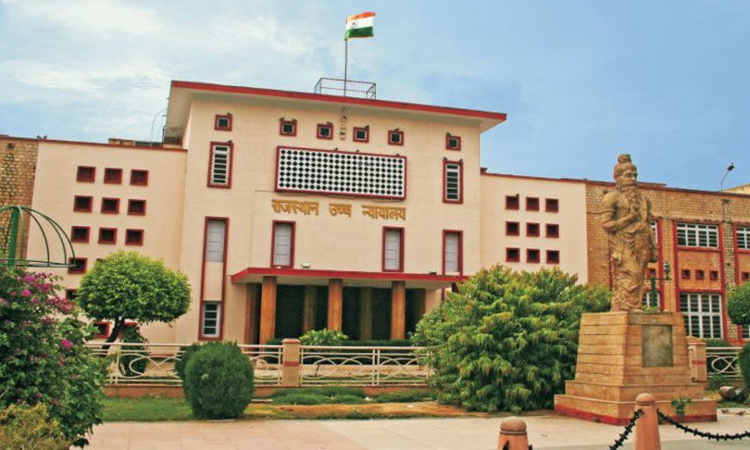

Photo: TrendSPLEND via Wikimedia Commons (CC BY-SA 4.0)
Judgment Intelligence
Petition AllowedLRs of Peer Seyyad Julfikar Ali Jilani & Anr. v. Rajasthan Board of Muslim Waqf
2025:RJ-JD:9881
S.B. Civil Writ Petition No. 19528/2023
- Court
- Rajasthan High Court
- Date of Decision
- 27 February 2025
- Bench
- Dr. Justice Nupur Bhati
- Relevant Acts & Sections
- Waqf Act, 1995 — Sections 2, 3(c), 3(d), 13, 14, 18, 23, 25, 27, 32; Constitution of India — Article 227; Code of Civil Procedure, 1908 — Order VIII, Order XVIII Rule 4, Section 151
Final Outcome
Petition allowed. The trial court's order of 05.12.2023, which had permitted the witness to amend his affidavit and exhibit the documents under the power of attorney, was quashed and set aside; pending applications were disposed of (paras 23-24).
Key holdings
- Only the Waqf Board, not its Chief Executive Officer, can delegate the Board’s powers under Section 27 (paras 20, 22).
- Exhibiting documents for the Board is part of defending the suit under Section 32(2)(i) (paras 19, 21).
- A power of attorney from the Chief Executive Officer to a person outside the Section 27 categories is non-est (paras 21-22).
- The trial court’s order of 21.02.2022 only let the documents be taken on record, not exhibited (para 21).
- Under Article 227 the High Court will not consider a document never placed before the trial court (para 11).
Brief Facts
In 1995 the petitioners sued the Rajasthan Board of Muslim Waqf at Nagaur for a declaration that the Dargah Bade Peer Sahab is a private dargah and an injunction against their removal as Sajjadanashin (para 2). The Board's evidence affidavit was filed in 2019 by a witness, and documents it produced later were taken on record on 21.02.2022 (para 2.1). Relying on a power of attorney dated 01.09.2023, the witness then sought leave to amend his affidavit and exhibit those documents for the Board; the trial court allowed this on 05.12.2023 (para 2.1). The petitioners challenged that order under Article 227 (para 1). The Board's counsel sought to file a Board resolution in the High Court (para 8).
Court's Findings
The Court first refused to take the resolution on record: it was never before the trial court, and jurisdiction under Article 227 is supervisory, not appellate (para 11). It applied the Waqf Act, 1995, which governs all auqaf, whenever created (para 12). Section 27 lets the Board, by general or special order in writing, delegate its powers to the Chairperson, a member, the Chief Executive Officer, another officer or servant, or an area committee (para 13). The Chief Executive Officer is under the Board's administrative control and exercises only the powers assigned or delegated to him; Section 25(3) does not provide for any further delegation (paras 17-18, 20). Instituting and defending suits relating to auqaf is a Board function under Section 32(2)(i) (paras 19-20). Exhibiting documents for the Board amounts to defending the suit (para 21). The Board could not show that the authorised person fell within any Section 27 category, and the power of attorney bore the Chief Executive Officer's signature, so it was non-est in law (paras 21-22). The trial court had also misread its order of 21.02.2022, which only allowed the documents to be placed on record, not exhibited (para 21).
Legal Principle
Under Sections 27 and 32(2)(i) of the Waqf Act, 1995, only the Waqf Board can delegate its power to institute and defend suits relating to auqaf, and only to the persons and area committees named in Section 27. The Chief Executive Officer cannot pass that power on to anyone outside those categories (paras 20, 22).