
Judgment Intelligence
Bail GrantedAlka v. State of Rajasthan
2026:RJ-JP:39244
S.B. Criminal Miscellaneous Bail Application No. 14796/2026
- Court
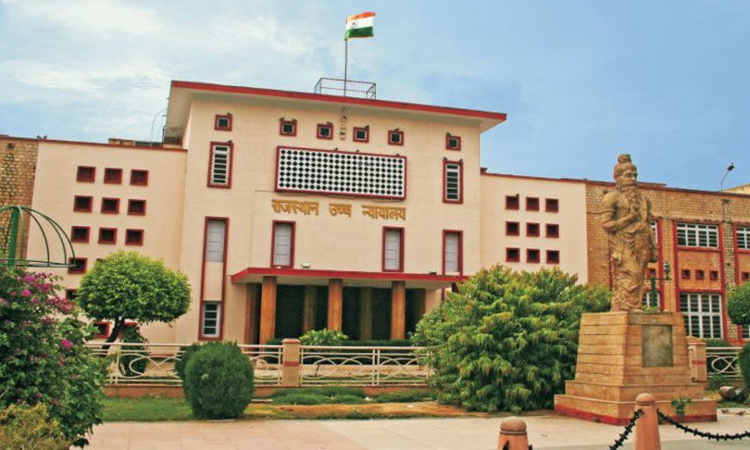
- Rajasthan High Court
- Date of Decision
- 25 September 2026
- Bench
- Justice Farjand Ali
- Relevant Acts & Sections
- Code of Criminal Procedure, 1973 — Section 438; Indian Penal Code, 1860 — Sections 419, 420, 120-B; Rajasthan Public Examination (Prevention of Unfairmeans) Act, 1992 — Sections 4, 5, 6; Information Technology Act, 2000 — Section 66D; Bharatiya Nagarik Suraksha Sanhita, 2023 — Sections 480, 482
Final Outcome
Anticipatory bail allowed: if arrested in FIR No. 39/2024, Police Station SOG, she is to be released on a personal bond of Rs 50,000 with two sureties of Rs 25,000 each, on conditions including joining interrogation and not leaving India without permission (para 8).
Key holdings
- Revelations passing from one accused to another are leads for investigation, not substantive evidence to justify arrest (para 5.2).
- A person cannot be arrested merely because the agency later decides she ought to be arrayed as an accused (para 5.3).
- The longer an investigation has run, the more a tangible connecting circumstance is needed before liberty is curtailed (paras 5.4, 5.11).
- The statutory protection for women accused, including under Section 480 of the BNSS, weighs in favour of anticipatory bail (para 5.10).
Brief Facts
The SOG's FIR No. 39/2024 alleges that a gang leaked the question paper of the Supervisor (Women Empowerment) Direct Recruitment Examination, 2018, conducted by the Rajasthan Subordinate and Ministerial Services Selection Board, and supplied answers to candidates through Bluetooth devices for money (paras 1-2). The offences include cheating and conspiracy under the IPC and the Rajasthan Public Examination (Prevention of Unfairmeans) Act, 1992 (para 1). Apprehending arrest after an order of 14.09.2026, the petitioner sought anticipatory bail, which the State opposed (paras 1, 3-4).
Court's Findings
The petitioner was not named in the FIR, no prosecution witness attributed any role to her, and neither charge-sheet mentioned her in any capacity (paras 5-5.1). The case against her proceeded from one disclosure to another, A naming B and B naming C; without deciding their admissibility, the Court held that such revelations are not substantive evidence and cannot justify curtailing liberty (para 5.2). A person cannot be arrested merely because the agency later forms an opinion that she should be arrayed; there must be tangible material with a nexus to the offence (para 5.3). The belated attempt, for a 2018 recruitment, 2019 examination and 2024 FIR, called for circumspection (para 5.4). Citing Joginder Kumar, the Court said the power to arrest differs from its justification, and arrest would gravely harm a woman with no antecedents (para 5.8). The offences did not carry death or life imprisonment, the protection for women under Section 480 of the BNSS deserved consideration, nothing suggested she would abscond, and no custodial interrogation was shown to be necessary (paras 5.10-5.11).
Legal Principle
Anticipatory bail may be granted where a person not named in the FIR, witness statements or charge-sheets is sought to be implicated only through a chain of disclosures; such statements made during investigation are not substantive evidence and cannot alone justify arrest (paras 5.2-5.3, 6).
Precedents Relied Upon
- Joginder Kumar v. State of U.P. (1994) 4 SCC 260
The existence of the power to arrest is one thing and the justification for exercising it is another; arrest should not be used as a punitive tool where the investigation can proceed without custody.
- Siddharam Satlingappa Mhetre v. State of Maharashtra & Ors. AIR 2011 SC 312
Referred to on the principles governing anticipatory bail.
- Sushila Aggarwal v. State (NCT of Delhi) AIR 2020 SC 831
Referred to on the principles governing anticipatory bail.
