Introduction
The Indian tax system is built on detailed statutes and procedures, yet even the most robust framework must operate within the limits set by the Constitution. When tax authorities act beyond their powers or violate legal rights, the Constitution provides an extraordinary remedy in the form of writ jurisdiction. This mechanism acts as a safeguard to ensure fairness and legality in tax administration.
Consider a compliant taxpayer who has met every statutory requirement, only to discover that their bank account has been frozen overnight or a refund arbitrarily denied. In such circumstances, the ordinary appellate route may be too slow to offer meaningful relief. This is precisely where the extraordinary remedy of writ jurisdiction steps in — a constitutional safety net to protect taxpayers against unlawful or unfair action.
Constitutional Framework: Articles 32 and 226
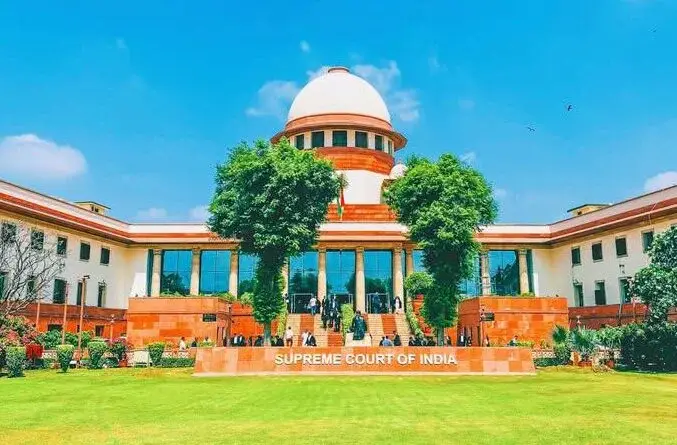
Under the Indian Constitution, both the Supreme Court and the High Courts are empowered to issue writs for the enforcement of rights. Article 32 vests the Supreme Court with the authority to issue writs for the protection of fundamental rights — and this provision is itself a fundamental right, enabling citizens to approach the apex court directly.
Article 226, on the other hand, gives the High Courts a much wider reach: they can issue writs not only for fundamental rights but also for the enforcement of any other legal right. This power is, however, discretionary — High Courts may decline to exercise it when an effective alternative remedy is available under tax laws. A High Court can issue writs against any person or government authority within its territorial limits or where the cause of action arises.
Types Of Writs In Tax Disputes
In tax matters, writs are most often used to restrain authorities from acting beyond their jurisdiction or to quash illegal orders. The most commonly invoked writs are Mandamus, which compels an authority to perform its legal duty; Prohibition, which stops a subordinate authority from overstepping its powers; and Certiorari, which quashes orders passed without jurisdiction or in violation of natural justice. While Quo Warranto and Habeas Corpus are rare in tax disputes, they may still be invoked in exceptional situations.
The Rule Of Alternate Remedy — And Its Exceptions
Although courts generally insist that taxpayers first exhaust the statutory appeal or revision remedies provided under tax laws, there are well-recognised exceptions to this “Rule of Alternate Remedy.”
Writ petitions are entertained where the authority lacks jurisdiction, where there has been a gross violation of natural justice, or where the statutory remedy is ineffective or causes irreparable harm. These exceptions were clearly articulated by the Supreme Court in its landmark judgment in Whirlpool Corporation v. Registrar of Trademarks, Mumbai & Others [1998] and have since been consistently upheld.
In Radha Krishan Industries v. State of Himachal Pradesh, 2021 (48) G.S.T.L. 113 (SC), and Godrej Sara Lee Ltd. v. Excise and Taxation Officer-cum-Assessing Authority, [2023 (384) E.L.T. 8 (S.C.) = (2023) 3 Centax 49 (S.C.)], the apex Court reaffirmed that writ jurisdiction can be invoked where statutory remedies are ill-suited or where fundamental principles of natural justice are violated.
Continued Relevance In The GST Era
Recent cases illustrate that writ jurisdiction remains fully alive and relevant in the GST era. In Central Board of Indirect Taxes and Customs v. Aberdare Technologies Pvt. Ltd., [(2025) 29 Centax 10 (S.C.)], the Court emphasised that bona fide clerical errors in GST returns should not deprive taxpayers of their input tax credit. In Dell India Pvt. Ltd. v. Joint Commissioner (Karnataka HC), a reassessment based on a mere change of opinion was quashed as invalid.
Conclusion
Writ jurisdiction is therefore not a routine remedy but a powerful constitutional mechanism — one that ensures that even in the complex world of taxation, the rule of law prevails.
The views expressed are the personal views of the author.