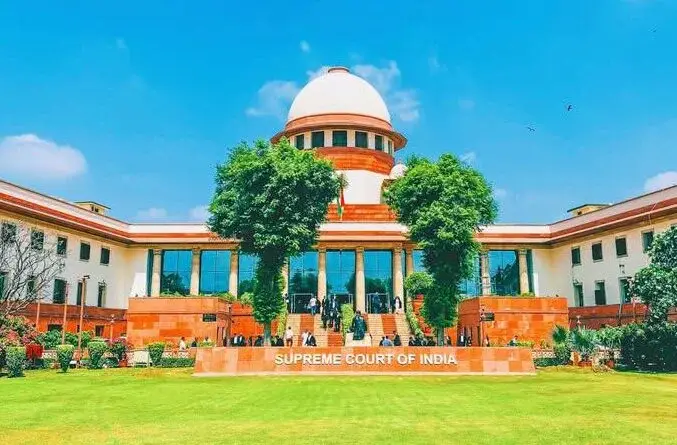
The Supreme Court of India has upheld the acquittal of a man accused of possessing 11.05 kg of charas, ruling that the consent obtained for his search did not comply with the mandatory provisions of Section 50 of the Narcotic Drugs and Psychotropic Substances Act, 1985 (NDPS Act). The Court affirmed that offering an accused a “third option” of being searched before a police officer, apart from a magistrate or gazetted officer, vitiates the entire trial.
The judgment in State of Himachal Pradesh v. Surat Singh (2026 INSC 240) was delivered on March 16, 2026, by a division bench comprising Justice Prasanna B. Varale and Justice Pankaj Mithal.
Background
In March 2013, police in Himachal Pradesh alleged that they recovered 11 kg 50 grams of charas from a backpack carried by the respondent, Surat Singh, during a routine nakkabandi operation. The trial court convicted him under Section 20 of the NDPS Act, sentencing him to 10 years’ rigorous imprisonment and a fine of ₹1 lakh.
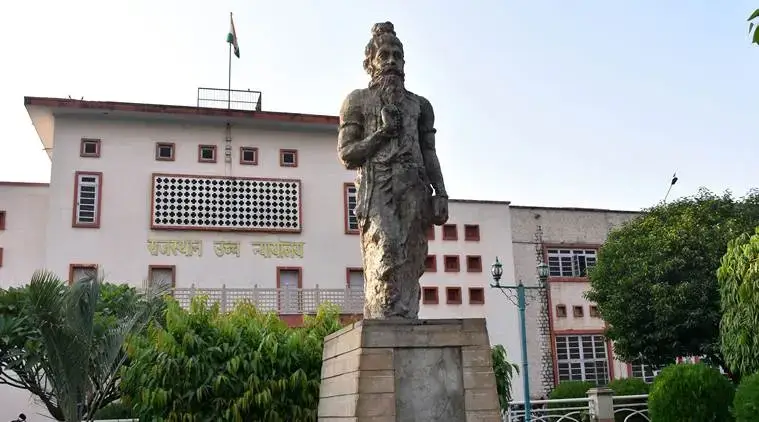
However, the Himachal Pradesh High Court set aside the conviction in 2015, observing that the consent memo improperly offered Singh a third option — to be searched by the investigating officer in the presence of witnesses — in addition to a magistrate or gazetted officer. The High Court held that this violated Section 50, which governs searches of persons.
Supreme Court’s Observations
Dismissing the State’s appeal, the Supreme Court endorsed the High Court’s reasoning, reaffirming that strict compliance with Section 50 is mandatory when a personal search is conducted. Justice Varale wrote that the investigating officer’s conduct was “clearly contrary to the provisions of law,” emphasizing that failure to apprise the accused of his legal right renders the search suspect and the trial invalid.
The Court cited earlier decisions, including Suresh v. State of Madhya Pradesh [(2013) 1 SCC 550], State of Rajasthan v. Parmanand [(2014) 5 SCC 345]*, and Vijaysinh Chandubha Jadeja (Constitution Bench), reiterating that providing a third alternative or incomplete information cannot satisfy Section 50’s requirements.
Additionally, the bench noted discrepancies in the prosecution’s evidence — particularly, the testimony of PW–8, who denied that an electronic weighing scale (reportedly used by police) was ever in his shop — further weakening the State’s case.
Key Legal Takeaways
- Section 50 NDPS Act applies when both a person and the bag carried by them are searched.
- Non-compliance with Section 50 — such as offering a “third option” — renders the recovery and subsequent conviction unsustainable.
- Reverse burden under Section 54 arises only after lawful recovery is established.
- The Court reiterated that interference with acquittal is limited unless the lower court’s view is “impossible or perverse.”
Outcome
The Supreme Court found no error in the High Court’s appreciation of evidence and legal interpretation, concluding that the prosecution failed to establish its case beyond reasonable doubt. The appeal by the State of Himachal Pradesh was dismissed, and the acquittal of Surat Singh was confirmed.
Citation: State of Himachal Pradesh v. Surat Singh, Criminal Appeal No. 96 of 2018, decided on March 16, 2026.
Coram: Justice Prasanna B. Varale and Justice Pankaj Mithal.
Bench Classification: Non-reportable.